
When Replacing Your Legacy Software Seems an Impossible Task
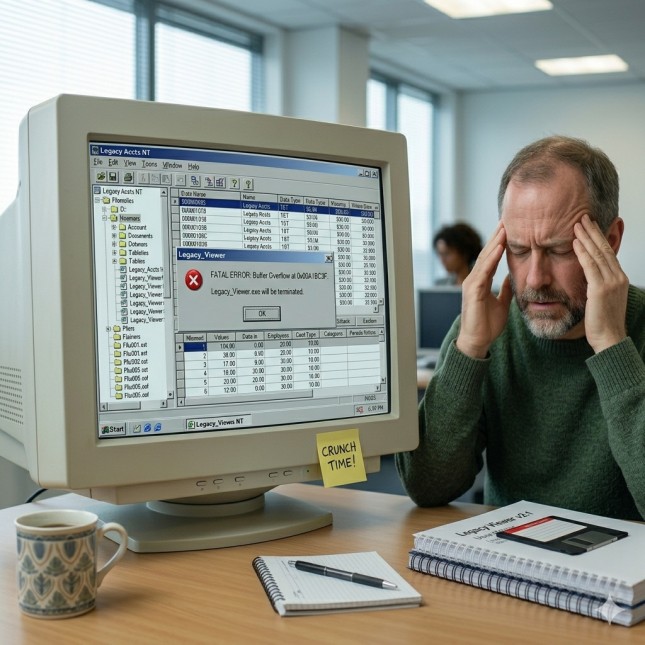
Many businesses reach a point where their software no longer supports how they work—but replacing it feels overwhelming. The system is deeply embedded in daily operations, full of workarounds, and often built on years (sometimes decades) of incremental changes.
It can feel easier to tolerate the problems than to face the disruption of change.
But while replacing legacy software can seem impossible, in reality it’s often a gradual, structured process—not a single dramatic overhaul.
Why Legacy Systems Stick Around for So Long
Legacy software usually doesn’t survive because it’s good—it survives because it’s critical.
Common reasons businesses delay replacing it include:
- It “still works” (just about)
- It supports essential daily operations
- Staff are used to it, even if it’s inefficient
- It’s deeply tied to other systems and processes
- The original developer or knowledge of it may be long gone
Over time, these systems become part of the business infrastructure—even if they’re slowing everything down.
The Real Cost of Doing Nothing
When a system is fragile or outdated, the cost isn’t always obvious at first. But it builds quietly in the background.
You may start to notice:
- Increasing reliance on manual workarounds
- Slow reporting and decision-making
- Frequent downtime or performance issues
- Difficulty hiring or training new staff
- Risk of data loss or inconsistency
The longer a legacy system is left in place, the more business processes adapt around it—making future change feel even harder.
Why Replacement Feels So Difficult
It’s not just a technical challenge—it’s a business one.
Replacing legacy software can feel impossible because:
1. It Touches Everything
Core systems are often connected to multiple departments, processes, and external tools.
2. Knowledge Is Fragmented
Understanding how the system truly works may depend on a few key individuals—or outdated documentation.
3. Fear of Disruption
Businesses worry about downtime, lost data, or operational chaos during transition.
4. No Clear Starting Point
The system is so complex that it’s difficult to know where to begin.
The Key Misconception: “We Have to Replace Everything at Once”
One of the biggest blockers is the belief that legacy systems must be replaced in one big, high-risk project.
In reality, successful replacements are usually:
- Incremental rather than all-at-once
- Focused on specific processes or modules
- Built alongside existing systems before full transition
This approach significantly reduces risk and makes the change manageable.
A More Practical Approach to Legacy Replacement
Instead of attempting a full overhaul, businesses often benefit from a staged strategy:
1. Understand the Current System
Before changing anything, map out:
- What the system does
- Who uses it
- Where the pain points are
- What processes depend on it
This creates clarity in what actually needs replacing.
2. Identify High-Impact Areas First
Not everything needs to be rebuilt immediately.
Focus on:
- The most inefficient processes
- Areas causing frequent errors or delays
- Parts of the system that limit growth
3. Build Around Existing Systems
New components can be introduced gradually, working alongside legacy tools.
This reduces disruption and allows users to adapt over time.
4. Migrate in Phases
Instead of switching everything overnight, move functionality step by step:
- One process at a time
- One department at a time
- One workflow at a time
5. Retire the Legacy System Gradually
As new systems take over more responsibility, the old system can be safely phased out.
Where Bespoke Software Makes the Difference
Legacy systems are often unique to the business—meaning off-the-shelf replacements rarely fit properly.
This is where bespoke software becomes particularly valuable.
A tailored solution can:
- Replicate essential functionality without carrying over inefficiencies
- Integrate with existing tools during transition
- Be built incrementally alongside your current system
- Adapt to how your business actually operates today
Rather than forcing your business to change overnight, it allows change to happen at a controlled, manageable pace.
What Success Looks Like
Replacing legacy software doesn’t mean removing everything instantly. Success looks like:
- Reduced reliance on outdated processes
- Improved speed and accuracy of information
- Less manual intervention
- Better visibility across the business
- A system that evolves with your organisation
Most importantly, it creates confidence that your technology is supporting growth—not holding it back.
Final Thoughts
When legacy software starts to feel impossible to replace, the challenge is rarely technical—it’s structural and organisational.
But with the right approach, replacement doesn’t need to be a single risky leap. It can be a gradual, well-planned transition that reduces disruption while steadily improving how your business operates.
The key is to stop thinking in terms of “replacement” and start thinking in terms of evolution—building a better system step by step, until the old one is no longer needed.
Recent Insights
Transforming your Business With Bespoke Software (eBook)
This eBook explains how growing businesses outgrow spreadsheets and off-the-shelf tools, and why bespoke software provides a scaleable, efficient solution aligned to their operations.
Find Out MoreUsing Spreadsheets to Run Your Business? What’s the Risk?
Spreadsheets are popular because they’re flexible, familiar, and work well for simple or early-stage business tasks. However, as a business grows, relying on them for core operations can create hidden risks—reducing accuracy, efficiency, and the quality of decision-making, and turning a once-helpful tool into a weak foundation.
Find Out MoreIs Off-the-Shelf Software Holding You Back?
Off-the-shelf software is a practical starting point for growing businesses due to its ease, cost-effectiveness, and broad functionality. However, as a business evolves, these tools can become restrictive, creating friction and limiting further growth.
Find Out MoreHow Bespoke Software Aligns with Your Business Processes (and Doesn’t Fight Them)
Off-the-shelf software promises speed, affordability, and convenience. But as many organisations discover, it often comes with a hidden cost: compromise.
Find Out MoreInnovative technology that’s worth your investment
Whatever the size or complexity of your business, we can design a software solution to help drive efficiency improvements.